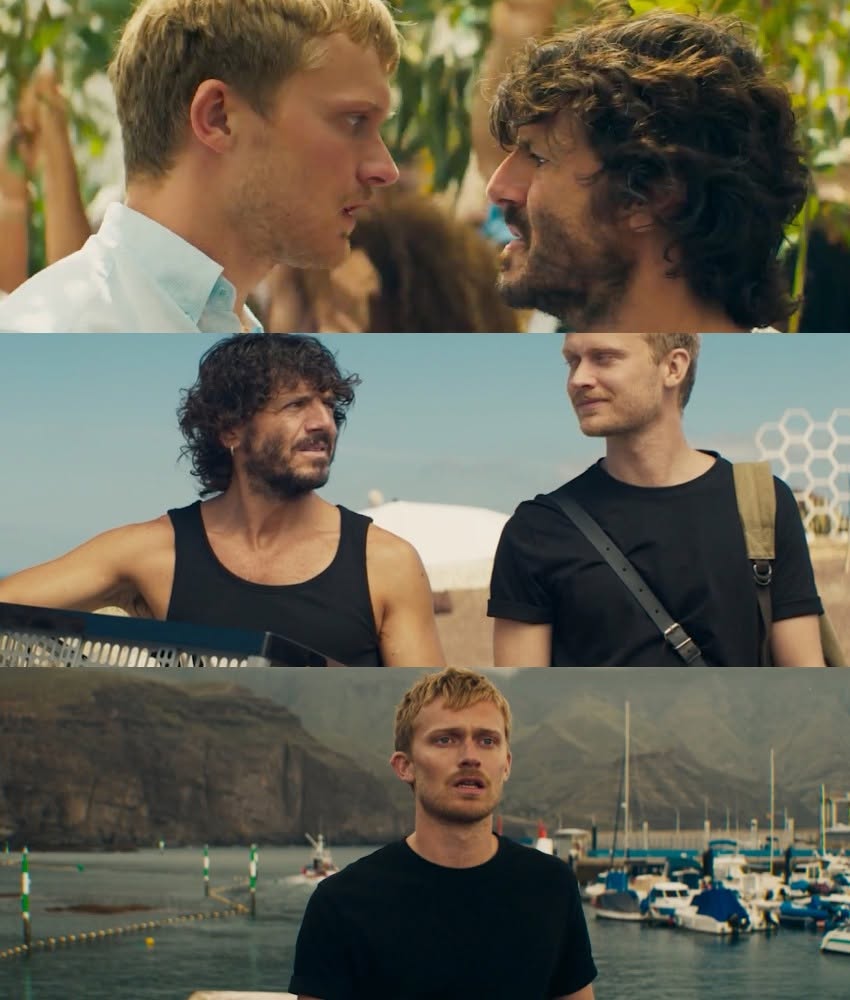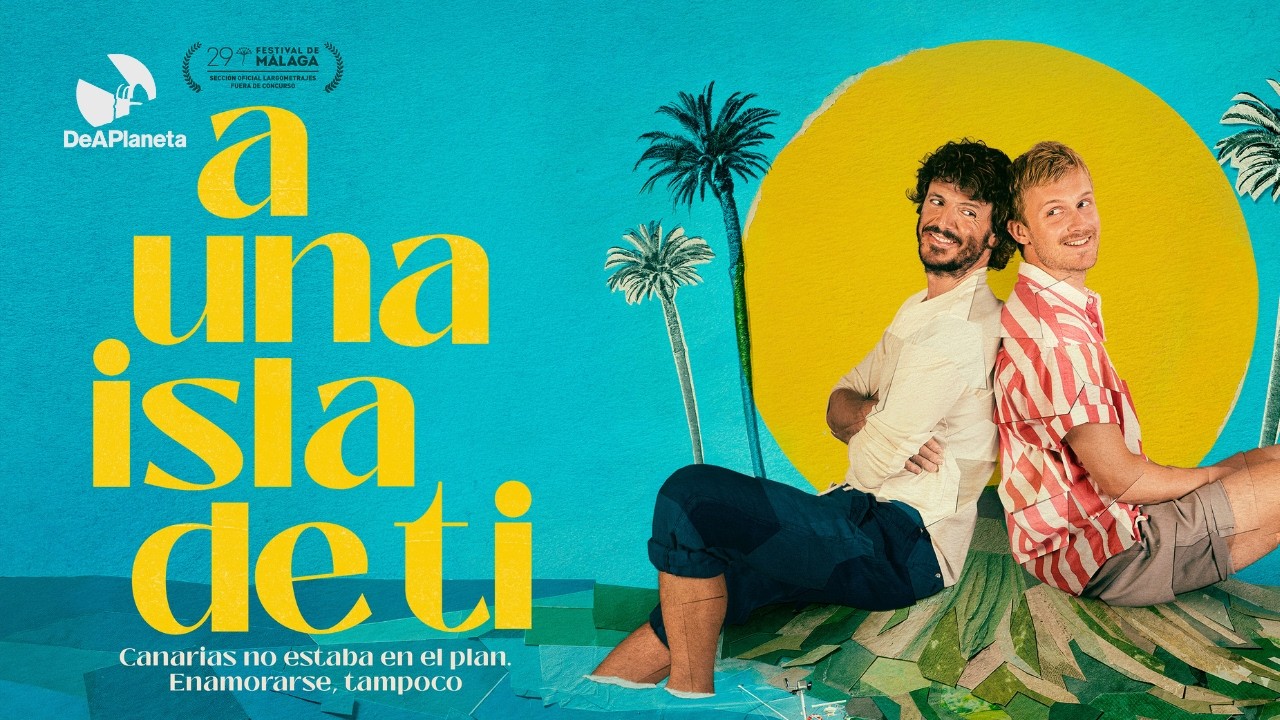
An Island Away From You is a Spanish film. Lately, when watching films, I seem to care more and more only about looks, losing myself in beauty and breezing through a film without reflecting very much. Sometimes I wonder whether my expectations of a film’s depth are getting lower and lower.
In any case, the male leads in this film are handsome. Harry, the white male lead, is fine in my view, but Iván is truly handsome.
The film follows a fairly standard holiday-romance formula, but one thing that makes it comfortable to watch is that it does not rigidly apply a single traditional pattern: two people become attracted to each other, have one conflict, and finally return to calm. As a romance, it introduces several rises, falls, and turns, so the viewing experience never becomes tiring.
When Harry and Iván first meet, what draws them together is naturally no more than primal impulse and attraction. Later, their different approaches to cooking and their cultural backgrounds create an obvious disagreement. This is precisely one of the film’s better choices: love cannot depend on a momentary impulse alone; ultimately, it concerns the feelings and ideas of both people.
Still, this is a romantic comedy. To keep the plot moving smoothly, Yaiza arranges for the two men to spend time alone and learn to cook together. The plot progresses so conveniently that I could not help laughing. As they cook, the two gradually get to know each other, begin to appreciate each other’s culture, and slowly develop chemistry and an unspoken understanding.
If this were merely an ordinary, clichéd romantic comedy, the conflict might have ended here. But the director does not let the story stop. The film is only about one hundred minutes long, and many heterosexual romantic comedies contain no more than a single rise and resolution; this film introduces a second layer of difference at this point.
The two become attracted while cooking, then celebrate a festival together, reach an emotional high point, and naturally spend the night together. But afterward, a new problem emerges: Yaiza still believes that her parents will reunite. This becomes the second conflict between the men. They can only hide their romance and keep it from Yaiza.

At the same time, Iván openly tells his daughter at dinner that although he and her mother raised her together, he now feels that living alone is also good. This makes the whole situation complicated: Iván is clearly not ready to take the next step and make the relationship public, nor has he decided how to deal with it. He believes the relationship will not last. Although he cannot control his feelings and has spent a night with Harry, he still thinks the two of them will not have a future.
This is when one of the film’s classic lines appears: “Every interesting person I know, everyone who interests me, comes with a return ticket.”
From this point on, the two fall into terrible awkwardness. They lose touch; Harry reaches out to Iván, but Iván does not respond. Later, Yaiza practically drags her father into the kitchen to cook. Here comes another coincidence designed to move the plot forward: the sight of the wedding makes Harry sad, and then he burns his hand, so he can only ask Iván to help him finish the food. Their feelings reach another peak, and their problems seem temporarily resolved.
However, a third crisis soon erupts. Beyond the men’s own concerns, Yaiza sees them together and cannot accept it at first. This becomes the third crack between them. Iván feels that if the relationship makes his daughter so upset and is so difficult for her to accept, then it is not worth continuing.
What follows is the familiar romantic-film sequence in which someone talks sense into a character. Yaiza’s mother steps in, and the daughter finally lets go of her objection. But Iván returns to the second problem: no matter how deep the feelings are, he still cannot see a future. He cannot bear to leave the island, and he cannot bear to ask Harry to stay. The film’s final obstacle therefore returns to the question of whether this relationship has a future, and the story reaches its climax.
For me, the most romantic scene is Harry desperately running to the shore. Iván is preparing to leave by boat, and Harry shouts to him from a distance: “You can’t just run away like this. I think you’re running from things. You want a better life, and you absolutely can have it. I don’t believe you’re a drifter who will wander forever and never place his feelings in anyone. These problems can all be solved. I want to stay here.”
Iván still instinctively tries to avoid the situation. In desperation, Harry shouts, “You do care about me!” He then bravely jumps into the water and waits for Iván to come back and rescue him. Although the act is very silly, it is also extremely romantic. I have absolutely no resistance to this kind of plot, and it is the most romantic scene in the entire film.
In the end, every problem is resolved, and Harry stays on the island, echoing the title An Island Away From You. This is not simply a story about holiday lovers who ultimately end up together. I have seen similar films before, such as one with “Autumn Manor” in its title: the themes are much the same—giving up city life and remaining in the countryside to live with one’s lover—but that film’s turns are much simpler.
An Island Away From You presents itself as a comedy, yet it manages to arrange so many layers of conflict and so many ups and downs that it exceeded my expectations. Films like this are usually watched mainly for the spectacle and the attractive cast, but it was better than I expected. It may not enter the list of films I treasure most, but it would be very suitable for watching on a date.
At least the obstacles the film creates are realistic enough, understandable, and connected to the characters’ foundations. Although its solutions and the methods it uses to advance the plot are sometimes too deliberate and clearly serve the story, the three conflicts themselves remain reasonable. For a light romantic comedy, that is already good enough.