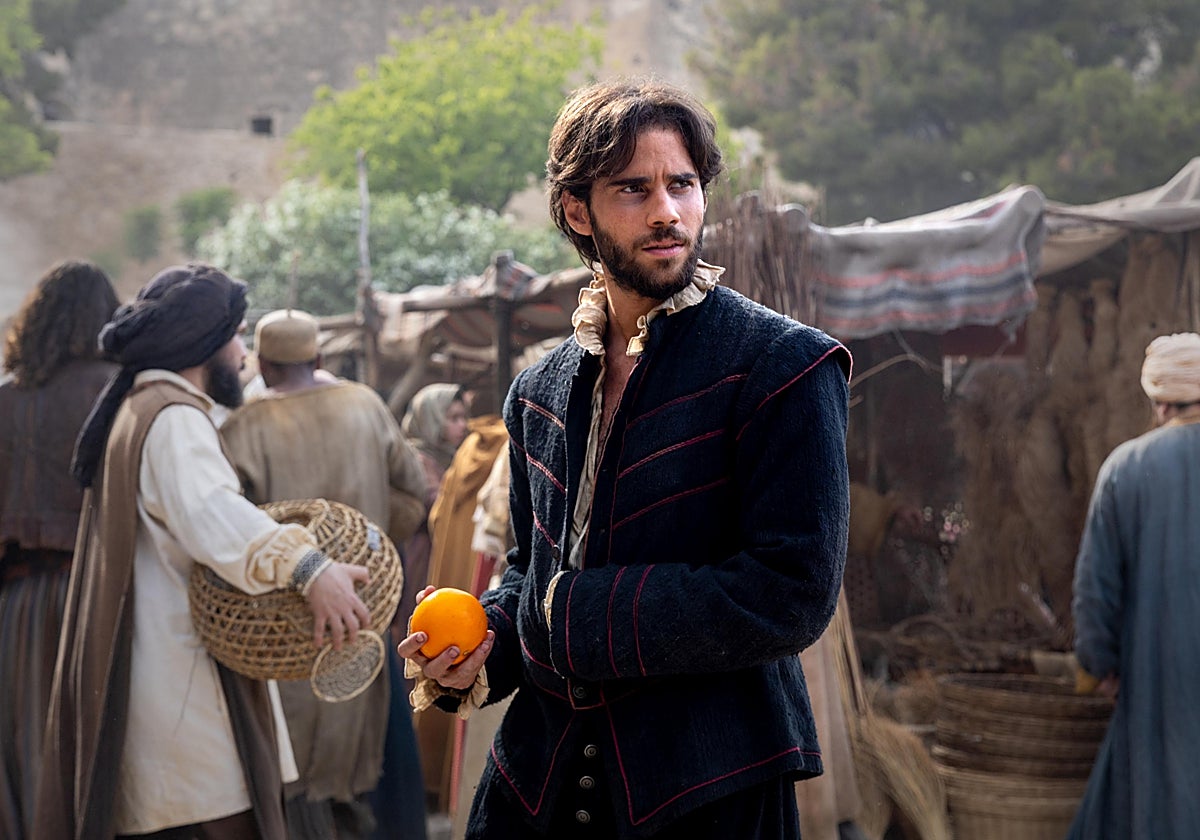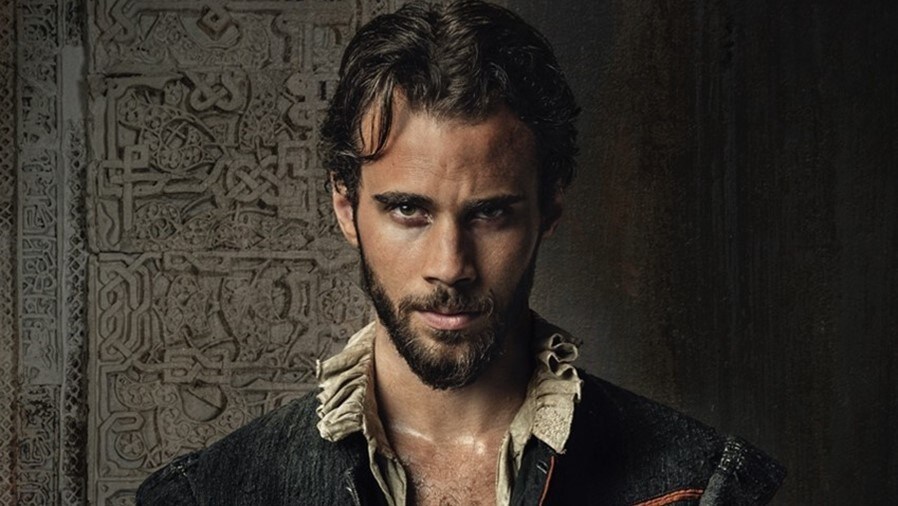
I noticed this film a long time ago, but I do not know why it only recently became popular again. Some people have described it as a kind of “South American Jinjiang literature,” that is, “the captive lord falls in love with me.” I personally think the film’s meaning is deeper than this interpretation.
In terms of its main theme, the film ultimately returns to the fact that Miguel is extremely talented and yearns for freedom. This theme is not difficult to understand, and images of windmills turning appear many times in the plot. If the film is understood only as a romantic relationship, the historical background it involves will be overlooked. Although the story carries out a fairly bold, yet still reasonable, imagination and re-creation of Cervantes’s own historical experience, it is not only telling a story about love.
One of the images from the film that has probably circulated most widely in clips is the scene where the old priest goes to see his son. This part left a deep impression on me, because the conflict is almost not depicted through dialogue; relying only on actions and looks, it presents the dramatic feeling of the entire scene. The two go from excitement when they meet, to despair and grief; the son also goes from tangled unease to finally choosing firmly to be himself again. In the end, the old priest should also have come around a little. Although he may not be able to fully accept this matter, later, when facing Miguel, he also seems to extend a helping hand. Of course, this may also be my overinterpretation, and the later part does not focus on depicting this detail.
Regarding Miguel’s emotional experience, there is one very interesting point. When he was first judged guilty, although he had felt moved, it still cannot be said that he had already developed a strong sense of sin and guilt. After he first has relations with Hassan in the bathroom, when he returns, he shows a heavier sense of guilt. This may mean that before being captured, although he had had similar feelings, he had not truly acted on them; only when actual behavior occurred this time did he feel that his “sin” had become heavier. Before that, when he wandered outside alone, facing everything he saw, his overall psychological state was more one of novelty and astonishment.
There have already been many analyses of his relationship with Hassan, and I do not think there is much more that can continue to be dug into. The only thing worth saying is that before Miguel left, he may really have considered whether to stay. At that time he was not certain, and only at the final moment did he run toward freedom again. Precisely because he had already been conflicted and struggling for a long time, that moment’s decision seems especially painful.
After Miguel is almost hanged, the director deliberately lets sunlight shine in through the window, and he sits among a pile of sofa cushions. This is clearly suggesting a luxurious cage. The choice expressed at the end of the film is nothing more than this: no matter how happy the bird in the cage is, in the end it will still fly far away. Hassan is attracted to Miguel largely because of his talent; but his talent and ambition are also destined to make him fly toward a broader place.
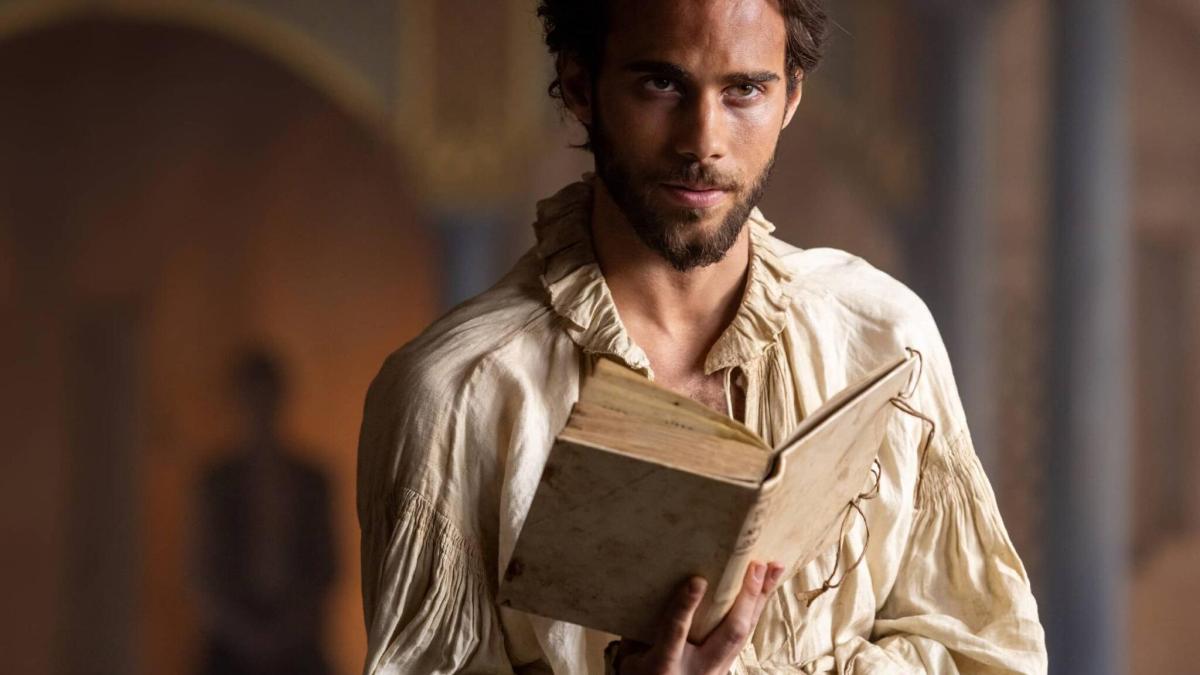
If one must pick an “exception,” it is that the actor playing Miguel is really too handsome, often making people lose focus while watching. Especially the scene where he is captured and his hands are shackled. With such an actor placed here, it is indeed somewhat difficult to make the audience believe that Hassan’s feelings for him have nothing to do with appearance. Of course, this does not count as a flaw. The actors playing those gaunt and physically damaged characters in the film also perform very well.
Overall, this story still describes the process of a person pursuing freedom. When the film reaches its middle, the audience has actually already vaguely felt that Hassan is destined to be unable to keep Miguel by his side.
Another place worth analyzing is what Hassan says when talking about those rescued captives: he does not know whether they have truly gained freedom. The film leaves a large amount of blank space around Hassan’s background, but this single phrase already reveals many things. Perhaps Hassan once walked the path Miguel is now walking and experienced similar things. He feels that he has obtained another kind of freedom in the Muslim world; while those captives who return to Spanish Christian society, even if their bodies have been liberated, may continue to be bound by strict religious doctrine. So who, in the end, truly possesses spiritual freedom? This is a confusing question.
Therefore, Hassan wants Miguel to stay not only out of personal emotion and selfishness. He certainly has considerations for himself, but he is also worried about Miguel’s fate after returning and what he will have to face in the future.
The film as a whole adopts a relatively idealized expression, letting most people stand on Miguel’s side, and therefore the priest’s denunciation of him does not succeed. However, whether Spain at the time could really offer a better situation for people like Miguel than staying by Hassan’s side is also something that must be questioned. This is another blank space left by the film.